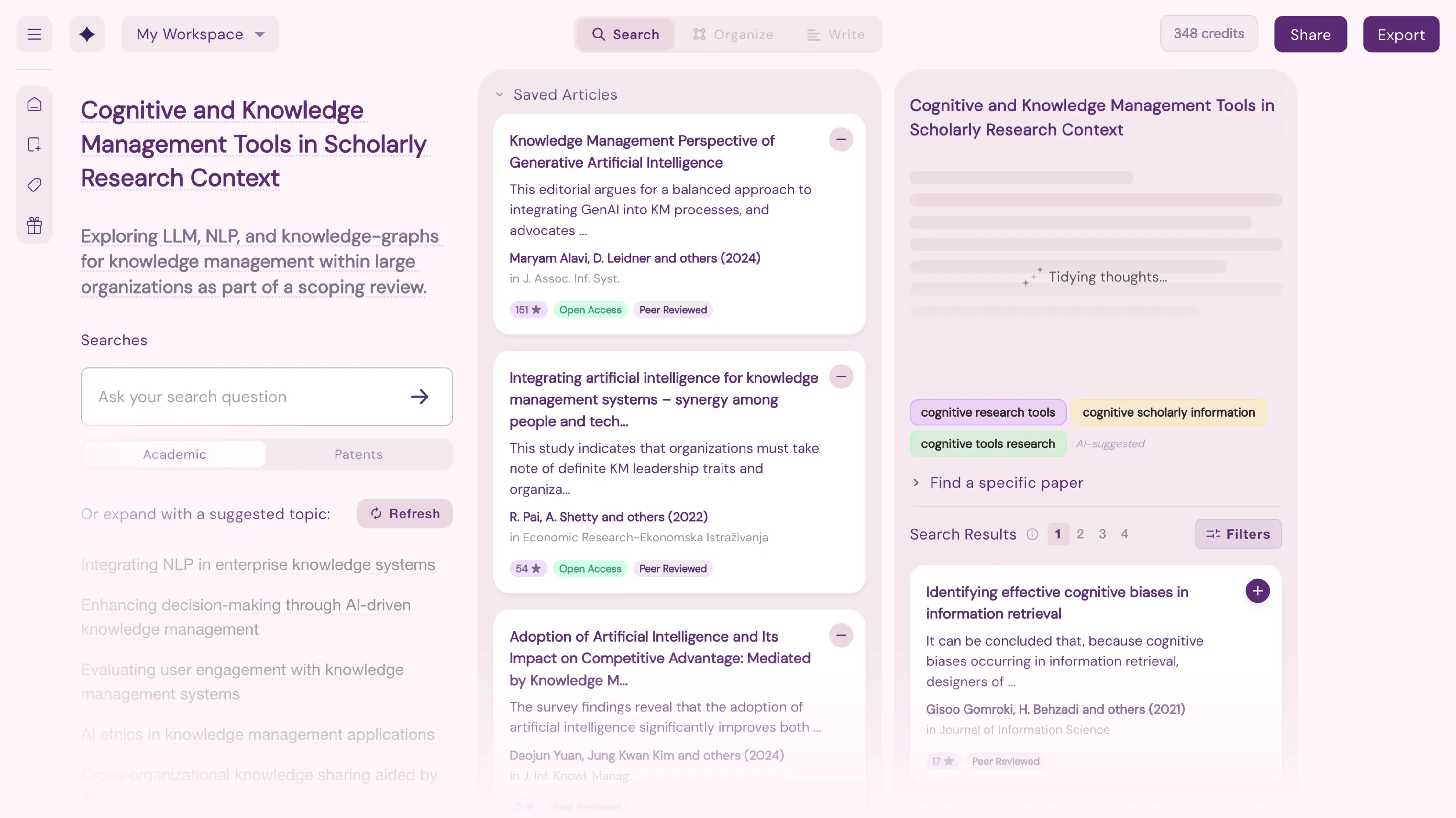
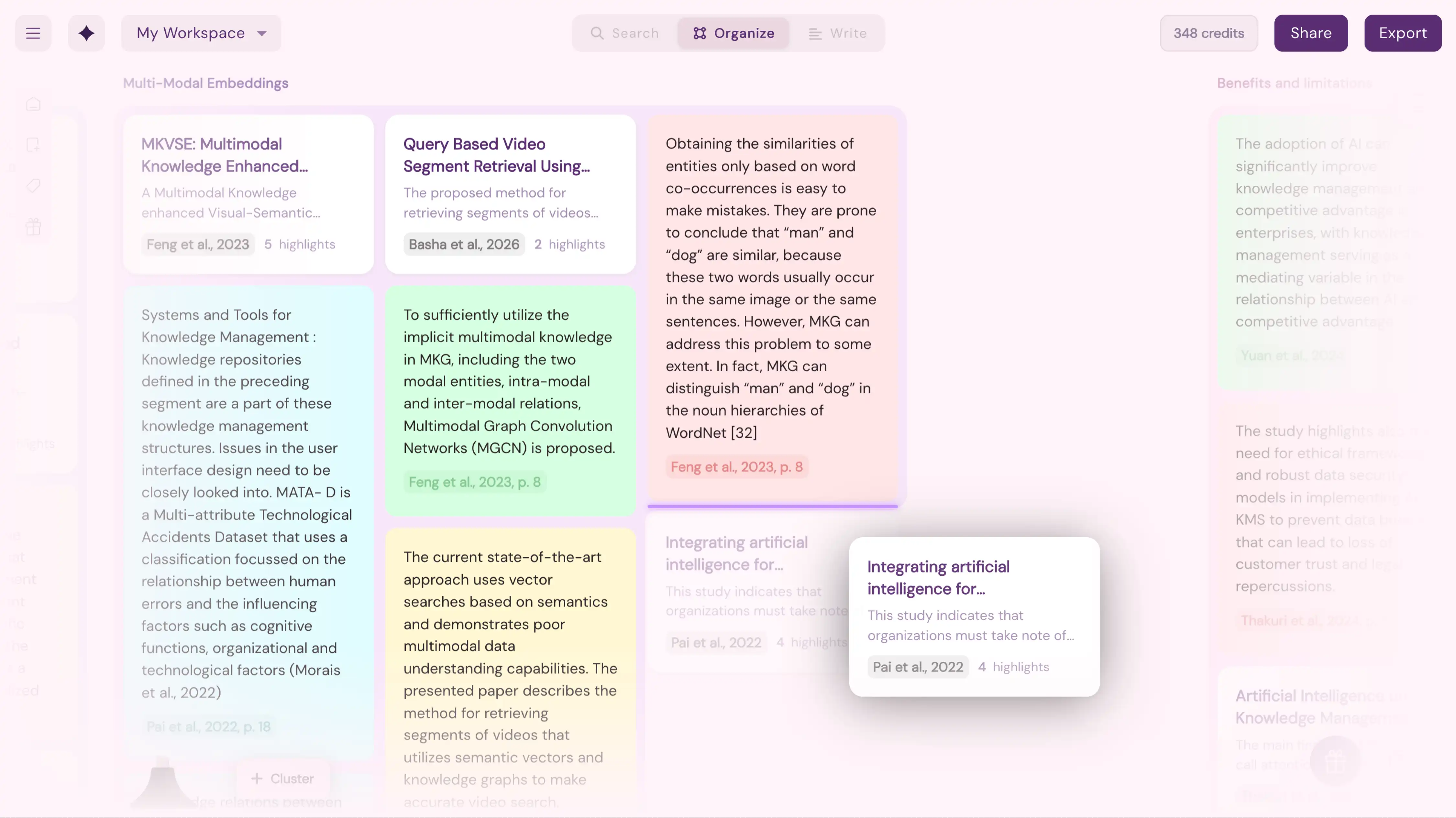
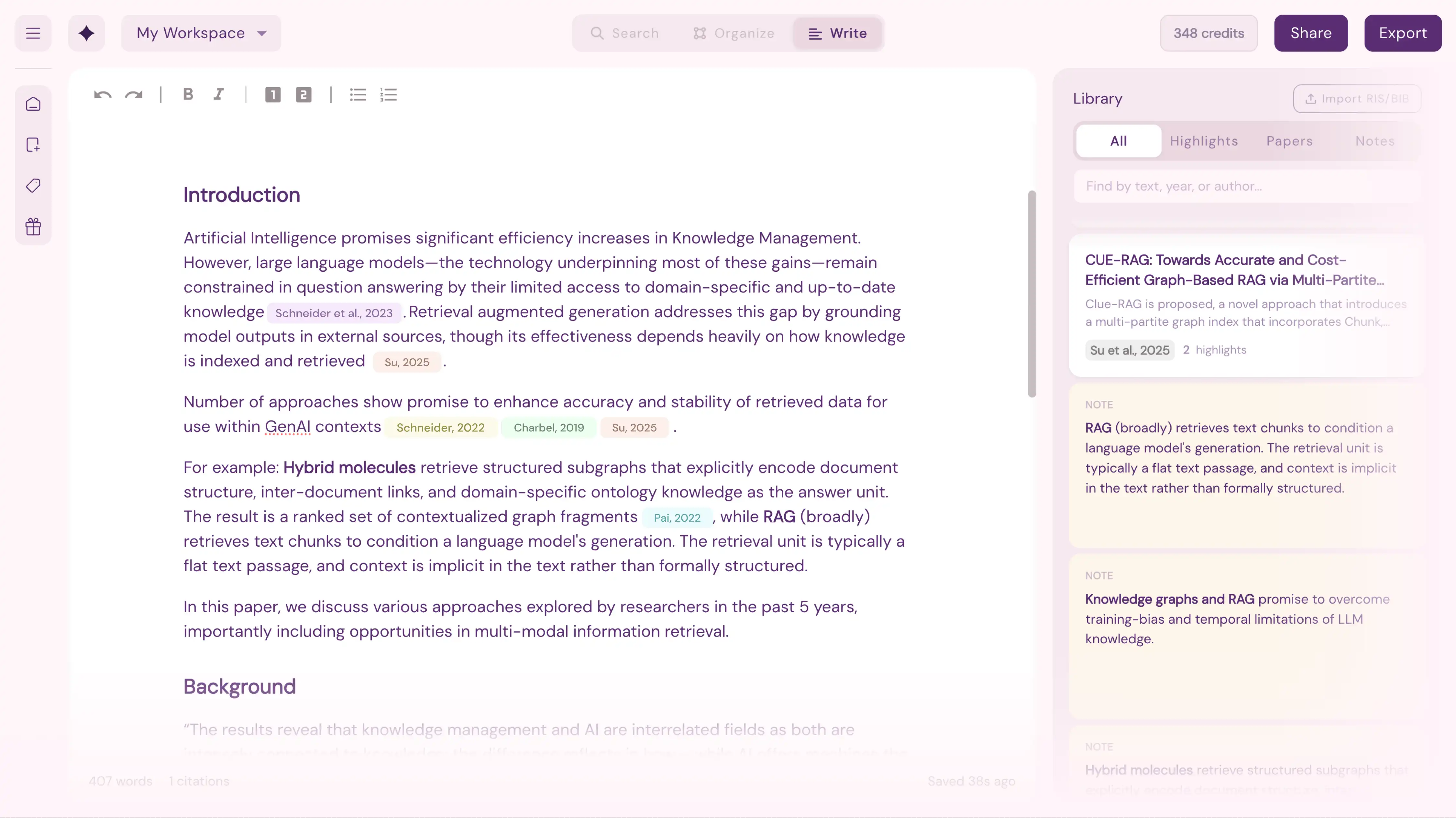
A workspace, not a chatbot
Discovery, analysis, collaboration, writing, and supervision in one shared space — with full provenance the whole way through.
The goals it moves
Not engagement metrics — the institutional outcomes that actually move the needle for a department or a provost.
Student persistence
Students who can navigate the literature don’t stall out. Wonders keeps momentum through the hardest stretch — the review.
Degree completions
Chapter 2 is where timelines slip. A guided workflow gets students to a finished, rigorous review — and across the line.
Capability building
Raise research capability institution-wide without hiring more methodologists — Wonders teaches the method as students work.
Efficient supervision
Supervisors see the process, not just the final PDF — feedback in the workspace, not endless email threads.
Integrity by design
Summaries and answers link to the papers behind them, and the process stays visible to supervisors — integrity built into the workflow, not checked by a detector afterwards.
Lower supervision cost
Less time per student on mechanical review work means real saved staff hours — and capacity reclaimed.
Built to fit your governance
It’s the first question a provost or a librarian asks — before “what can it do?”. Here’s the honest answer, on the three axes most AI policies share.
Human oversight by default
AI guides; people decide. Wonders doesn’t write papers — it teaches researchers to work critically with their sources. Nothing happens without a human in the loop.
Transparent provenance
Citation provenance in the editor (in beta) traces every citation and paraphrase back to its origin, and a supervisor audit view shows what a student cited, and how — no black box to take on faith.
Fair & reliable
Equitable access for every student, and we never train models on student or institutional work. Built on open standards — auditable, interoperable, and durable.
More detail in the AI Safety Center →, and why detection is the wrong model →
Doctoral research, confidently
The literature review is where momentum dies and timelines slip. Wonders structures discovery, organization, writing, and supervisor collaboration into one workflow — so students finish the review with confidence and rigor, not at 3am the night before.
Critical research skills, built with structured guidance — and a reason for everyone to say yes.
Students — Research independence
Become independent researchers, with rigorous exploration guided step by step — not answers handed over.
Supervisors — Visibility & time back
See the process behind the work through shared workspaces. Transparent sourcing cuts plagiarism risk with built-in proof of work.
Research teams — More published
Less admin in the literature review — find the real gaps and get to publishable insight faster.
Leadership — Measurable outcomes
Scale research capacity without expanding support staff — and raise the institution’s research profile.
Case study · National University
National University put Wonders in front of its doctoral cohort to speed up thesis-topic discovery, raise citation quality, and ease supervision load. It stuck.
“It’s incredibly refreshing to see students get around literature more independently and with greater clarity.”
 Andy Riggle — AVP, Office of Graduate Studies
“Wonders has given our doctoral students a real research workflow — not just another AI tool. The team has been a true partner.”
(1) and (2) Self-reported by National University students and faculty in a post-deployment survey, March 2025, as published in the case study linked above. They describe that deployment, not Wonders users in general.
For your library
Library-licensed resources surface through SSO/SAML-managed institutional access — and the tools your students and staff already rely on plug right in.
Security & deployment
Need our DPA, or to run a security review? Talk to us — a real person will work through it with you.
We’re independent and post-revenue — no outside investors steering us toward an exit, no roadmap hijacked by the next funding round. We answer to the researchers who use Wonders, and we’re building to last.
In practice that means strong uptime, pilot partners who renew, public ratings we’re proud of — and when you have a question, you reach the people who build the product, not a ticket queue. Often, that’s the founder.
On three axes most policies share. Human oversight: AI guides, people decide — Wonders doesn’t write papers. Transparency: summaries and answers link to the papers behind them, and citation provenance in the editor (in beta) traces each citation and paraphrase to its source. Fairness & reliability: equitable access, no training on student work, and provenance built on open standards so it’s auditable and interoperable.
Yes. Library-licensed resources surface through SSO/SAML-managed institutional access, and the tools students and staff already use — EBSCO, OpenAthens, Zotero, LibKey — plug in. Full provisioning is part of an enterprise agreement.
Wonders is FERPA & GDPR-aligned, student data is private by default, and we never use institutional data to train AI models. We’ve also completed the HECVAT — the higher-ed community’s standard vendor security assessment. Need our DPA or to run your own security review? Talk to us — a real person will work through it with you.
Wonders does not generate essays or papers. AI summaries and answers link to the papers behind them, and shared workspaces give supervisors visibility into the research process, not only the final document.
Browser-based with no installation. You get SAML/SSO, usage dashboards, live training webinars, and dedicated support. Most institutions start with a pilot for a department or cohort — typically 4–8 weeks with measurable outcomes — before scaling.
Unlike a chatbot, Wonders is a structured research workspace: search 320M+ scholarly works, organize them visually, and write with citations that link back to real papers. The point isn’t a faster answer — it’s a better researcher.
Deployed at National University, under evaluation at KU Leuven and the University of Antwerp, with researchers at Cambridge, UC Berkeley, and Imperial College on the platform.
Start with a pilot for one department or cohort — typically 4–8 weeks, with outcomes you can measure. Talk to our team to scope it.
Book a walkthrough →
 Try Wonders for free